Monday - Friday 07:30 - 17:30, Saturday 07:30 - 16:00
Floorboard Sanding in Chelsea
Back to Portfolio
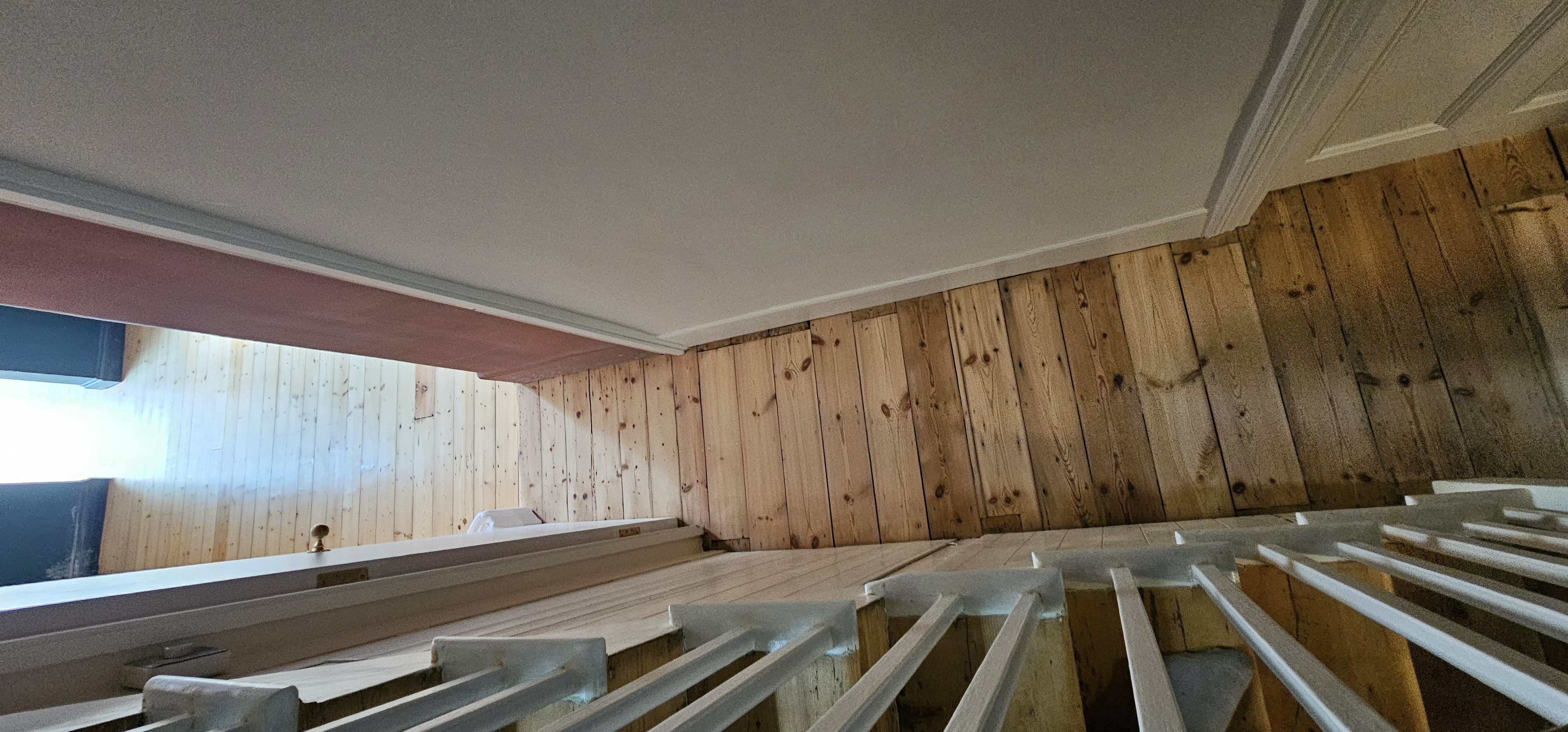
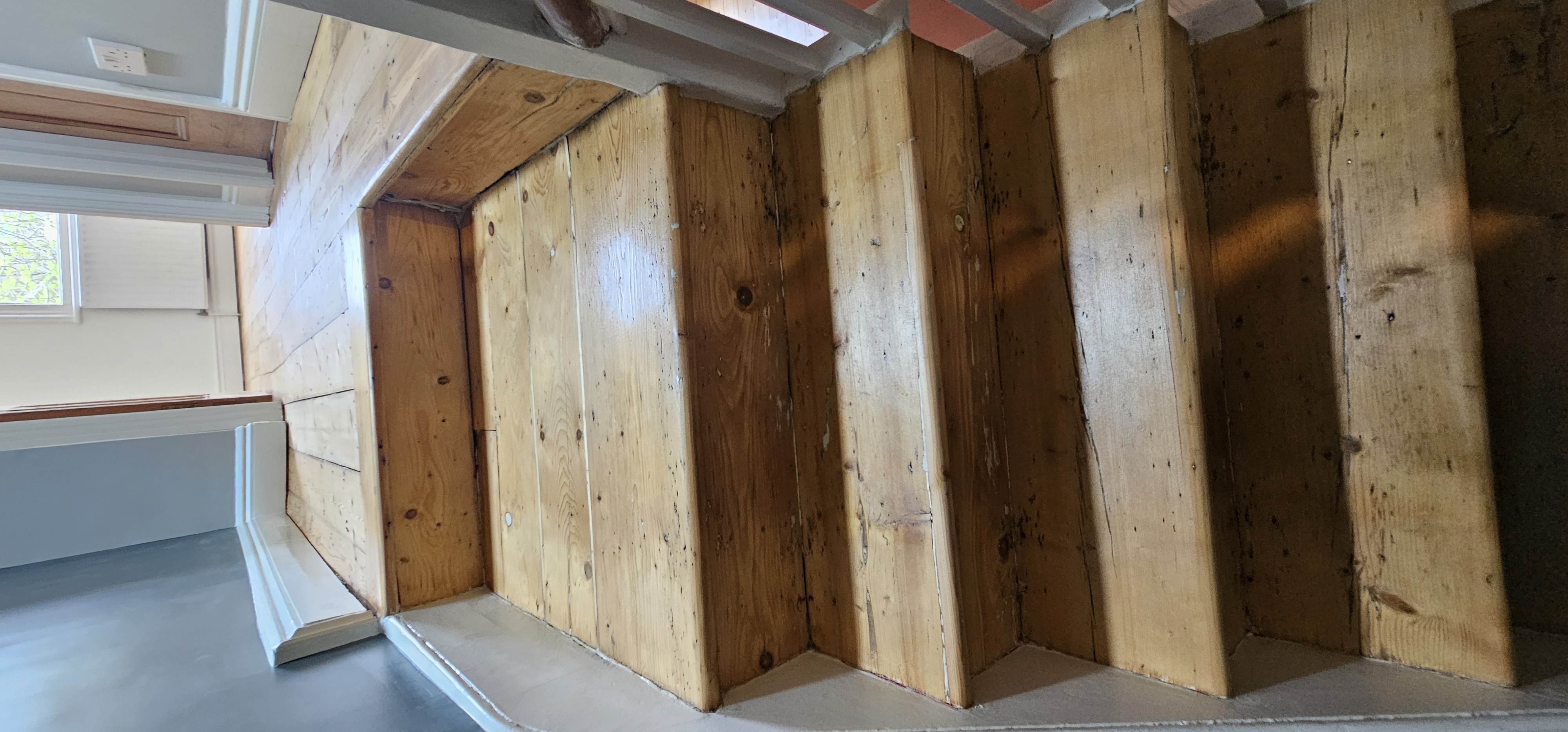
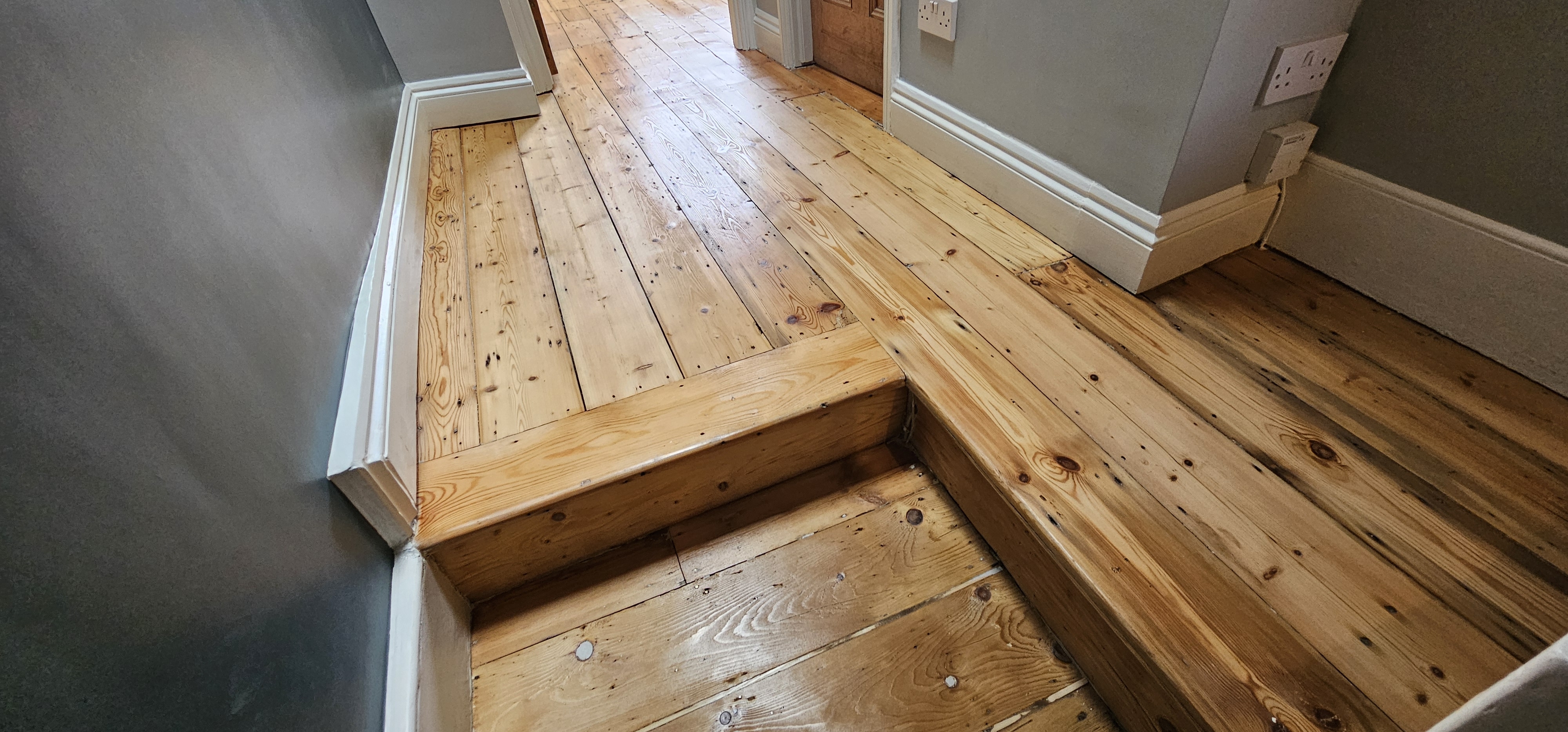
Floorboard Sanding in Chelsea
We recently completed a comprehensive floorboard sanding project in a Victorian terraced property in Chelsea. The client wanted to restore their original wooden floors across three rooms, removing decades of wear, old finishes, and surface damage to reveal the quality timber beneath.
Work carried out
- Sanding of approximately 85 square metres of original pine floorboards
- Removal of old varnish, stains, and surface imperfections
- Dust extraction throughout the process using industrial equipment
- Preparation and priming of the sanded surface
- Application of water-based finish in a satin sheen
About the project
The property contained three interconnected reception rooms with original Victorian pine flooring that had been covered with fitted carpets for many years. Once we removed the carpet, we found the boards were in mixed condition. Some areas showed deep scratches and staining from water damage, whilst other sections had retained their character well. The client had specifically requested that we keep the natural variations and knots visible rather than staining the wood to a uniform colour, which meant our approach needed to focus purely on smoothing and cleaning the surface without disguising the boards' authentic appearance.
We tackled the project in stages, starting with a thorough inspection to identify any loose boards or protruding nails that could damage our sanding equipment. We found several areas where floorboards had warped slightly, requiring careful work to avoid over-sanding and creating dips. The main challenge was managing dust in a period property with period windows and original plasterwork that we needed to protect. We sealed doorways with plastic sheeting and used a HEPA-filtered dust extraction system throughout, which meant working carefully but without the clouds of sawdust that older sanding methods create. The entire sanding and finishing process took two weeks, including drying time between coats.
About our Chelsea service
Chelsea properties present particular challenges and opportunities for flooring work. The area is dominated by Victorian and Edwardian terraced and semi-detached houses, many of which still have their original wooden floorboards. These older properties often contain better quality timber than modern alternatives, but the boards have typically experienced significant wear and multiple past attempts at refinishing. We work regularly in Chelsea on period properties where clients want to restore original floors rather than replace them entirely, which makes sanding an economical and authentic solution. The dense urban setting means we need to be particularly conscious of dust, noise, and access, especially when working in multi-storey homes where upper floors sit directly above occupied spaces.
Chelsea also has a growing number of newer developments and renovated properties where clients have installed new wooden or engineered floors. These newer installations sometimes require sanding when clients want to change the colour or refresh a finish that has worn unevenly. Whether we're working on original Victorian pine, reclaimed boards that have been installed as part of a renovation, or newer engineered timber, the principles remain the same: proper preparation, appropriate sanding equipment for the wood type, and careful dust management in what are typically occupied or occupied-adjacent properties.
Frequently asked questions
How much does floorboard sanding cost per square metre?
Sanding costs typically range from £25 to £45 per square metre depending on the current condition of the boards, the wood type, and the finish you want to apply. Floors that have existing varnish or heavy staining cost more to prepare than lightly finished boards. We provide a detailed quote after assessing the specific floor.
How long does sanding typically take?
The actual sanding process usually takes three to five working days for an average Chelsea property. However, the full project timeline including drying time between primer and finish coats extends to around two weeks. You can walk on the floor after 48 hours, but we recommend keeping it clear of furniture for a full week after finishing.
Is the dust-free sanding process actually dust-free?
Completely dust-free sanding doesn't exist, but modern dust extraction systems capture around 99 percent of particles at source using HEPA filtration. We seal the work area and use industrial extraction equipment throughout, which means minimal dust settles on surrounding surfaces. It's far cleaner than sanding methods from 10 or 20 years ago, making it manageable even in occupied homes.
Project Gallery