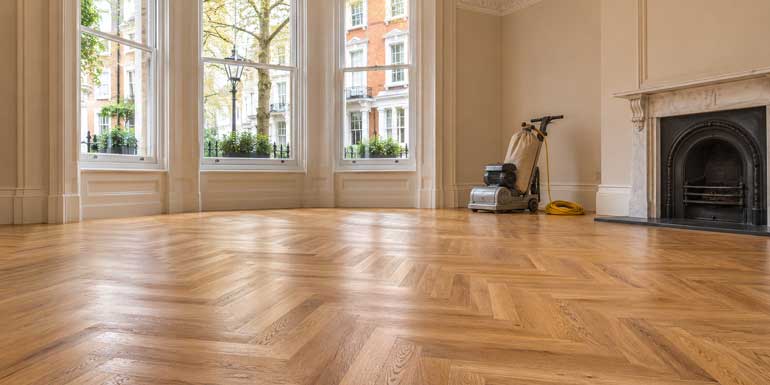
If you own a Chelsea home with tired wooden floors, the first question is usually what professional floor sanding will cost. In 2026, sanding and finishing a wood floor in Chelsea starts from around £25 per m². That puts a typical living room of 20-25 m² at roughly £500-£625 for sanding, buffing and a full finish.
The final bill depends on the condition of the floor, the type of timber, the finish you choose and any repairs needed. Whether you’re in SW3 or SW10, knowing what drives the price helps you compare quotes properly and avoid surprises.
What Does Floor Sanding Cost in Chelsea in 2026?
These are the starting prices for the most common jobs. They are “from” prices, and your quote will depend on the floor itself.
| Service | Starting price |
|---|---|
| Sanding, buffing and varnishing (3 coats of lacquer) | from £25 per m² |
| Sanding, buffing and oiling (2 coats of oil or hard wax oil) | from £25 per m² |
| Gap filling (gaps up to 5 mm) | from £7 per m² |
| Strip gap filling (gaps over 5 mm) | from £15 per m² |
| Staining | from £8 per m² |
| Recoating (lacquered or oiled floors) | from £10 per m² |
For a typical Chelsea home, sanding and finishing alone works out at roughly:
| Room | Approximate size | Starting cost |
|---|---|---|
| Small bedroom | 12 m² | from £300 |
| Standard living room | 22 m² | from £550 |
| Large reception room | 35 m² | from £875 |
| Whole-house project | 100 m² | from £2,500 |
These figures assume solid hardwood in reasonable condition. Victorian terraces and period conversions in SW3 often have uneven or historic timber, and that can add to the cost. You can see the full list on our floor sanding prices page.
Factors That Affect Floor Sanding Prices in Chelsea
Several variables decide where your quote lands.
Floor condition is the biggest driver. A floor with only surface wear sits at the lower end. Gaps, warping, cupping, deep scratches or old stains mean more preparation and repair time.
Wood type matters too. Original oak boards, which are common in Chelsea properties, take more care than softwoods such as pine. Parquet and herringbone need specialist handling, and our parquet floor sanding service is quoted after a survey.
Floor construction changes the job. Engineered boards have a thin top layer, so the work needs more skill and the wear layer thickness decides how much can be removed. Our engineered wood floor sanding page explains what’s safe.
The existing finish affects the time needed. Heavy lacquer build-up or old oils can take longer to remove than a thin, worn finish.
Your choice of finish changes the materials used. Lacquer, hard wax oil and stain all have different costs and different maintenance needs.
Access and layout add time. Tight hallways, stairs, fitted carpets to lift and cluttered rooms all increase labour.
What’s Included in a Floor Sanding Quote?
A clear quote should break the job down, so you can see exactly what you’re paying for.
- Sanding labour: the main cost, using modern dust-controlled equipment
- Finishing materials: lacquer, oil or hard wax oil, applied in the number of coats stated
- Edges and corners: hand and edge sanding where the main machine can’t reach
- Minor preparation: nail punching, cleaning and surface preparation
- Repairs: gap filling, board replacement or scratch repairs, quoted separately if needed
Typical repair prices to keep in mind:
- Local scratch repairs: from £375 per visit
- Original floorboard repairs: from £12 per metre
- Solid wood or tongue and groove engineered floor repairs: from £375 per day
Always check what finish is included, how many coats are applied and whether furniture moving or stairs are extra.
Getting a Quote for Floor Sanding in Chelsea
The most accurate price comes from a site visit. We offer free quotes and site visits across SW3 and SW10. We’ll look at the floor, discuss finishes, show samples and give you a clear written price.
When comparing quotes, ask these questions:
- Is the price fixed or hourly?
- How many coats of finish are included, and which brand?
- Is dust extraction included?
- How long before I can walk on the floor and replace furniture?
- Are repairs and gap filling included or extra?
- Is the company insured, and does it guarantee its work?
Expect sanding to take 1-3 days depending on room size and condition. Finishing adds more time for coats to dry, and a full cure can take several days. Most Chelsea homes are multi-storey, so working floor by floor often lets you stay in the property.
Money-Saving Tips for Floor Sanding in Chelsea
You can reduce the cost without cutting corners.
- Clear the room yourself. Moving furniture takes time, and the less there is to move, the quicker the job.
- Do several rooms at once. One larger project is usually better value than separate visits.
- Choose the right finish. A standard lacquer is a cost-effective option for busy family rooms, while oil gives a natural look but needs maintenance.
- Check for current offers. We run special offers from time to time.
- Consider recoating. If the floor is lightly worn and the finish is known, a recoat from £10 per m² can be far cheaper than full sanding.
- Plan ahead. Rush jobs and short-notice bookings cost more.
Don’t choose on price alone, though. A poorly sanded floor with visible machine marks or a thin finish won’t last, and redoing it costs more than doing it properly once.
Is DIY Floor Sanding Worth It?
Hiring a floor sander and edger can look cheaper on paper, but the hire cost is only part of it. You also pay for abrasives, finish and dust protection, and a mistake can leave drum marks, uneven edges or a patchy finish that is expensive to fix. On a valuable period floor, professional sanding is the safer choice.
Frequently Asked Questions
How much does floor sanding cost in Chelsea in 2026?
Floor sanding and finishing in Chelsea starts from around £25 per m². A typical 22 m² living room starts from about £550, and the final price depends on the floor’s condition, wood type and chosen finish.
How long does floor sanding take?
Sanding a typical room takes one to two days. Finishing adds drying time between coats, and the floor should cure fully before rugs and heavy furniture go back. Larger projects across several floors can take a week or more.
Is oil or lacquer cheaper?
Our starting price for sanding with a lacquer finish and sanding with an oil finish is the same, from £25 per m². The difference comes later. Lacquer is hard-wearing and low-maintenance, while oiled floors need periodic maintenance coats but are easy to spot-repair.
Can I sand my floor myself?
You can hire equipment, but professional results take experience. Uneven sanding, missed edges and a patchy finish are common mistakes, and a period floor is hard to repair if it goes wrong.
How often should floors be sanded?
Most floors need full sanding every 7-10 years, depending on traffic. Good care, felt pads and regular cleaning extend that, and a light recoat can refresh the finish in between.
Do you charge for a survey?
No. We offer free, no-obligation site visits and quotes in SW3 and SW10.
Get a Free Quote
Ready to restore your Chelsea floors? We’ll visit your home, assess the floor, show you finish samples and give you a clear, fixed-price quote with no hidden costs. Request a free quote or call us on 020 7036 0624.