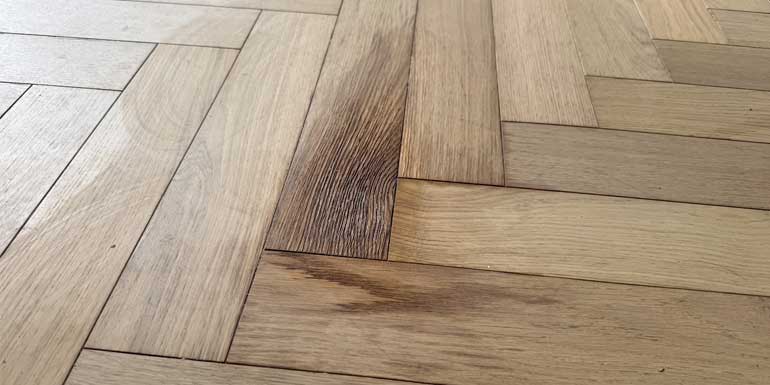
Pet accidents happen in every home. On a wood floor, though, urine does more than leave a mark. It soaks into the finish, seeps between the boards and can turn the timber dark grey or black within days. The good news is that fresh accidents are easy to deal with, and even older stains can often be fixed if you pick the right method for the damage.
This guide covers what to do straight away, how to treat older stains, how to get rid of the smell and when sanding is the only way to restore the floor.
Why Pet Urine Damages Wood
Urine contains ammonia, uric acid and salts. On a sealed floor with an intact finish, a quick wipe usually prevents any harm. Problems start when urine sits for hours, or when the finish is already worn or scratched.
- It breaks down the finish, leaving dull or cloudy patches.
- It soaks into the grain and the gaps between boards.
- It reacts with the natural tannins in timber such as oak and turns it dark.
- It leaves a lingering odour that can come back in humid weather.
- Repeated accidents in the same spot make every one of these worse.
Step 1: Act Quickly on Fresh Accidents
Speed matters more than the product you use.
- Blot, don’t rub. Use paper towels or a clean cloth and press down. Rubbing spreads the urine into the grain.
- Wipe with a damp cloth and a small amount of pH-neutral wood floor cleaner.
- Dry the area completely. Standing moisture is what causes dark staining.
- Apply an enzymatic pet cleaner to break down the odour-causing compounds, then dry again.
Avoid soaking the floor, and don’t use steam mops. Excess water pushes urine deeper into the wood and can lift the boards.
Step 2: Match the Fix to the Stain
Different stains need different treatments. Check what the mark looks like before you try anything.
| Type of stain | What it looks like | Best fix |
|---|---|---|
| Fresh puddle | Wet, no discolouration yet | Blot, clean, dry, enzymatic cleaner |
| Surface residue | Dull or cloudy patch, finish intact | Enzymatic cleaner and floor polish |
| Yellow or light brown stain | Colour in the finish only | Gentle cleaning, then spot recoat |
| Dark grey or black stain | Colour has reached the wood | Sanding and refinishing |
| Repeated accidents | Dark patches plus strong smell | Sanding, possibly board replacement |
Fixing Older Pet Urine Stains
If the stain has been there for days or weeks, surface cleaning alone won’t shift it. You have a few options.
Try an enzymatic cleaner first
Enzymatic cleaners digest the proteins and uric acid in urine. Apply the product, leave it for the time stated on the label, then blot and dry. It may take two or three treatments on an older stain. This helps with smell even when it doesn’t fix the colour.
Use a gentle bleaching method for light marks
On a bare or oiled floor, a diluted hydrogen peroxide solution can sometimes lighten a pale stain. Always test in a hidden corner first, because it can lighten the surrounding wood too. Use it on small areas only, and avoid it on lacquered floors where it won’t penetrate.
Know when to stop
If the wood is black, deeply discoloured or still smells strongly after two or three attempts, the urine has reached the timber itself. More cleaning won’t remove it, and heavy scrubbing just damages the finish around the spot.
Why Sanding Is Often the Real Fix
When urine has soaked into the wood, the only way to remove it is to take away the stained layer. Professional wood floor sanding strips off the finish and the discoloured top surface, then a fresh coat of oil or lacquer restores the colour and protection.
- Light and medium stains usually disappear completely after sanding.
- Sanding the whole floor gives a consistent colour, so the repair doesn’t look patchy.
- A new finish seals the wood, which makes future accidents much easier to clean up.
- Smell often improves because the contaminated layer has been removed.
Very deep stains can go further than sanding can reach. In that case a few boards may need replacing with matching timber, which can then be blended in during sanding.
What about engineered floors?
Be careful here. Engineered boards have a thin top layer of real wood, so there is limited material to remove. If the damage is deep, the wear layer thickness decides whether sanding is possible. A specialist can measure it first. Our guide to engineered wood floor sanding explains what is and isn’t safe.
Mistakes That Make Pet Stains Worse
- Using ammonia-based cleaners. They smell like urine to pets and can encourage repeat marking.
- Soaking the floor with water or steam.
- Covering the stain with a rug, which traps moisture.
- Using vinegar repeatedly, which can dull the finish over time.
- Scrubbing hard with abrasive pads, which scratches the lacquer and lets more urine in.
- Waiting too long. A stain treated in the first hour is far easier than one left overnight.
How to Protect Your Floor Going Forward
Once the floor is restored, a few habits will protect it.
- Clean up accidents immediately, and keep enzymatic cleaner to hand.
- Keep pets’ nails trimmed to reduce scratches that let moisture in.
- Add washable mats near doors, food bowls and favourite spots.
- Make sure the finish is in good condition. A worn finish is where most damage begins.
- Consider a hard-wearing finish if you have pets, such as a quality lacquer or hard wax oil.
- Train or encourage pets to use designated outdoor areas, and speak to your vet if accidents are new or frequent.
DIY or Professional Help?
DIY works well for fresh accidents and light surface marks. Call a professional when:
- The stain is dark, black or spread across several boards
- The smell comes back after cleaning
- The floor is original parquet or period boards that you want to protect
- Previous attempts have left patches or damaged the finish
- You’re not sure whether the floor is solid or engineered
In Chelsea, many homes have original timber that is worth saving, so getting it assessed before you start scrubbing is usually the cheaper route. If you want to see what’s involved, take a look at our parquet floor sanding service for patterned floors.
Frequently Asked Questions
Can pet urine stains be removed from hardwood floors?
Fresh stains usually can. Older stains that have turned the wood dark generally need sanding and refinishing to remove them completely.
Why do pet urine stains turn black on wood?
Urine reacts with the tannins in the timber and the moisture lets it spread into the grain. Oak is particularly prone to this.
Does hydrogen peroxide remove pet stains from wood?
It can lighten pale stains on bare or oiled wood, but it isn’t suitable for every floor and can lighten the surrounding timber. Test it in a hidden spot first.
How do I get rid of the smell of pet urine on a wood floor?
Use an enzymatic cleaner and dry the area thoroughly. If the smell returns, the urine has likely soaked into the boards or the gaps between them, and sanding is the lasting fix.
Can you sand out pet stains?
Yes, in most cases. Sanding removes the discoloured layer, and a fresh finish seals the wood. Very deep damage may need individual boards replaced.
Need Help With Pet Stains in Chelsea?
If cleaning hasn’t worked, or the marks are dark and the smell keeps coming back, our team can inspect the floor, explain your options and quote for the right repair. Request a free quote or call us on 020 7036 0624 to book a no-obligation visit.