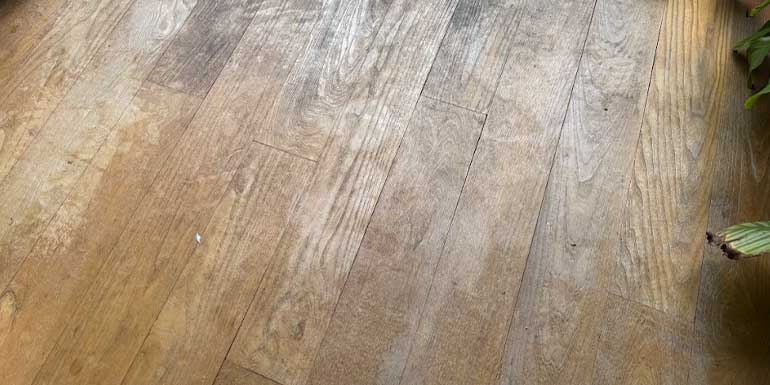
Lacquer is the protective layer that shields your timber from scratches, spills and daily wear. Over time it thins, dulls and eventually wears through, especially in hallways, doorways and in front of sofas. The good news is that worn lacquer doesn’t always mean a full refinish. The right fix depends on how far the wear has gone, and catching it early can save you a lot of money.
This guide explains how to recognise worn lacquer, what you can do about it at each stage and when sanding is the only sensible option.
How to Tell Your Lacquer Is Worn
Worn lacquer rarely fails all at once. It goes through stages, and each one calls for a different response.
| Stage | What you’ll see | What it means |
|---|---|---|
| Dull patches | Lost shine in walkways, hard to clean back | Lacquer is thinning but still protecting |
| Fine scuffing | Cloudy, hazy areas under light | Surface layer is worn, wood still sealed |
| Exposed patches | Grey or pale spots, rough to touch | Lacquer has worn through to bare timber |
| Dark marks | Stains around worn areas | Moisture and dirt have reached the wood |
| Peeling or flaking | Lifting edges or flakes of lacquer | The finish has failed or bonded poorly |
A simple water test helps. Put a few drops of water on the floor. If they bead up, the lacquer is still protecting the wood. If the water soaks in or darkens the timber, the finish has worn through.
What Causes Lacquer to Wear?
- Foot traffic, especially grit carried in on shoes
- Furniture dragging and unprotected chair legs
- Pets, whose claws scratch the surface
- Harsh or wrong cleaning products, which dull the finish
- Too much water, from wet mopping and spills left standing
- Direct sunlight, which can age and discolour the lacquer
- Age, because even good lacquer needs renewing eventually
Your Options for Fixing Worn Lacquer
1. Deep Clean and Polish
If the floor is dull rather than worn through, the problem may be built-up dirt and old polish. A thorough clean with a pH-neutral wood floor cleaner, followed by a suitable polish, can bring back the shine. Professional cleaning and polishing of lacquered floors starts from around £9 per m², and it needs the right product for your finish, so check compatibility first.
This works when the lacquer is still intact, but it can’t repair damaged areas.
2. Recoat the Floor
If the lacquer is worn but still intact, a recoat can restore the protection. A machine lightly abrades the surface so a new coat of lacquer bonds to it, which refreshes both the sheen and the protective layer.
- Recoating lacquered floors starts from around £10 per m².
- It only works if the existing finish is sound and the exact lacquer is known.
- It’s best done before the lacquer wears through to bare wood.
- Compatibility matters. A new coat can fail to bond if the product doesn’t suit the old one.
Recoating is the best-value fix when you catch the wear early, so don’t wait until the boards are exposed.
3. Spot Repair Small Worn Areas
For a small patch, such as one worn doorway or a few scuffed boards, a spot repair is sometimes possible. The area is cleaned, keyed and re-lacquered, then blended into the surrounding finish.
Results vary, and a spot repair can look patchy because new lacquer rarely matches old, aged lacquer exactly. It suits small, isolated areas more than whole rooms.
4. Sand and Refinish the Floor
When the lacquer has worn through to bare timber, or the wood is stained, grey or damaged, sanding is the proper fix. Sanding removes the old finish and the damaged surface layer, then a fresh finish gives the floor even colour and protection from edge to edge.
- Sanding, buffing and lacquering starts from around £25 per m².
- It removes stains, deep marks and uneven wear in one go.
- It lets you change the finish, for example from lacquer to hard wax oil.
- It gives a consistent result, where patch repairs often don’t.
Sanding removes the old finish and the damaged surface layer, so a professional wood floor sanding job leaves the whole floor with an even colour and a fresh finish from edge to edge. Prices start from around £25 per m², and the cost of sanding a floor in Chelsea depends on the condition of the boards, the wood type and the finish you choose.
Which Fix Do You Need?
| Condition | Best fix |
|---|---|
| Dull but sealed | Clean and polish |
| Worn but intact, water still beads | Recoat |
| One small worn patch | Spot repair |
| Bare wood showing, grey patches | Sand and refinish |
| Dark stains in the wood | Sand and refinish |
| Peeling or flaking lacquer | Sand and refinish |
| Unknown or mixed finishes | Professional assessment, usually sanding |
Why Timing Matters
Recoating is cheap and quick, while sanding is a bigger job. The difference is whether the wood underneath has been exposed.
- Act early and a recoat protects the timber before damage reaches it.
- Wait too long and moisture and dirt get into bare wood, staining it so that only sanding removes it.
If you can see the first dull patches in walkways, that is usually the right moment to call for advice.
Mistakes to Avoid
- Applying polish over worn areas. It sits on the surface, can look streaky and may stop a later recoat bonding properly.
- Using the wrong product. Oil-based products on lacquer can leave a residue.
- Wet mopping. Water gets into worn spots and darkens the wood.
- DIY lacquer on top of unknown finishes. If you don’t know what’s on the floor, the new coat can peel.
- Over-scrubbing. Abrasive pads strip what lacquer remains.
How to Make New Lacquer Last Longer
- Use doormats at entrances to catch grit
- Fit felt pads under furniture
- Clean with a pH-neutral wood floor cleaner and a barely damp mop
- Keep pets’ nails trimmed
- Use rugs in high-traffic areas, with breathable backing
- Recoat at the first signs of dullness, not after the wood is exposed
Frequently Asked Questions
Can you fix worn lacquer without sanding?
Yes, if the lacquer is still intact. Cleaning, polishing and recoating can all restore a dull or thinning finish. Once the wood is exposed or stained, sanding is the lasting fix.
How do I know if I need a recoat or a full sand?
Do the water test. If water beads on the surface, the floor can usually be recoated. If it soaks in, or the wood has darkened, it likely needs sanding.
Can I put new lacquer over old lacquer?
Sometimes. The surface needs to be properly prepared, and the new product has to be compatible with the old one. A professional can check this before starting.
How long does lacquer last on a wood floor?
It depends on traffic, the product and how well the floor is cared for. Busy areas wear first, so you may need to refresh walkways well before the rest of the room.
Is it cheaper to recoat or sand?
Recoating is cheaper per square metre, but it only works while the finish is intact. If you leave it too late, you’ll pay for sanding anyway.
Need Help With Worn Lacquer in Chelsea?
Not sure whether your floor needs a recoat or full sanding? Our team can inspect the floor, run the checks and give you a clear price for the right fix. We offer free quotes and site visits across SW3 and SW10. Request a free quote or call us on 020 7036 0624.